Drew Klein · 21 October 2026
Tivano's Local Historians Digitize Medieval Trade Records to Reveal Forgotten Valley Connections
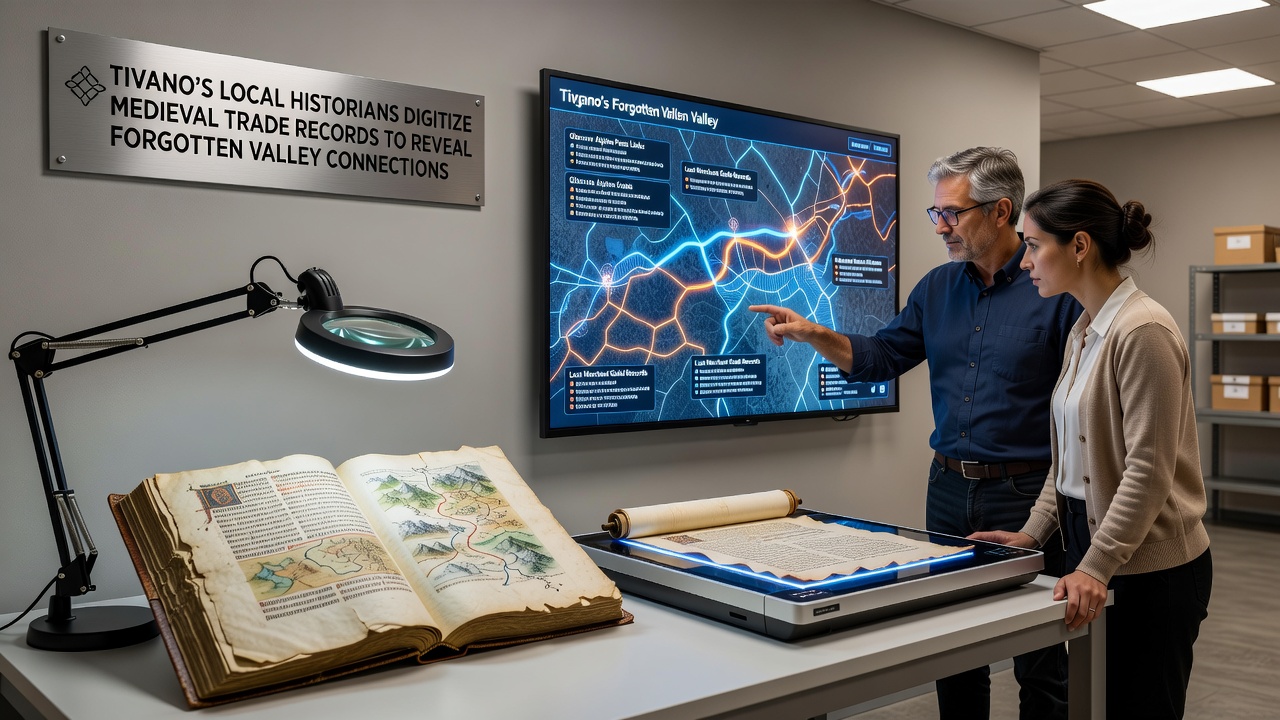
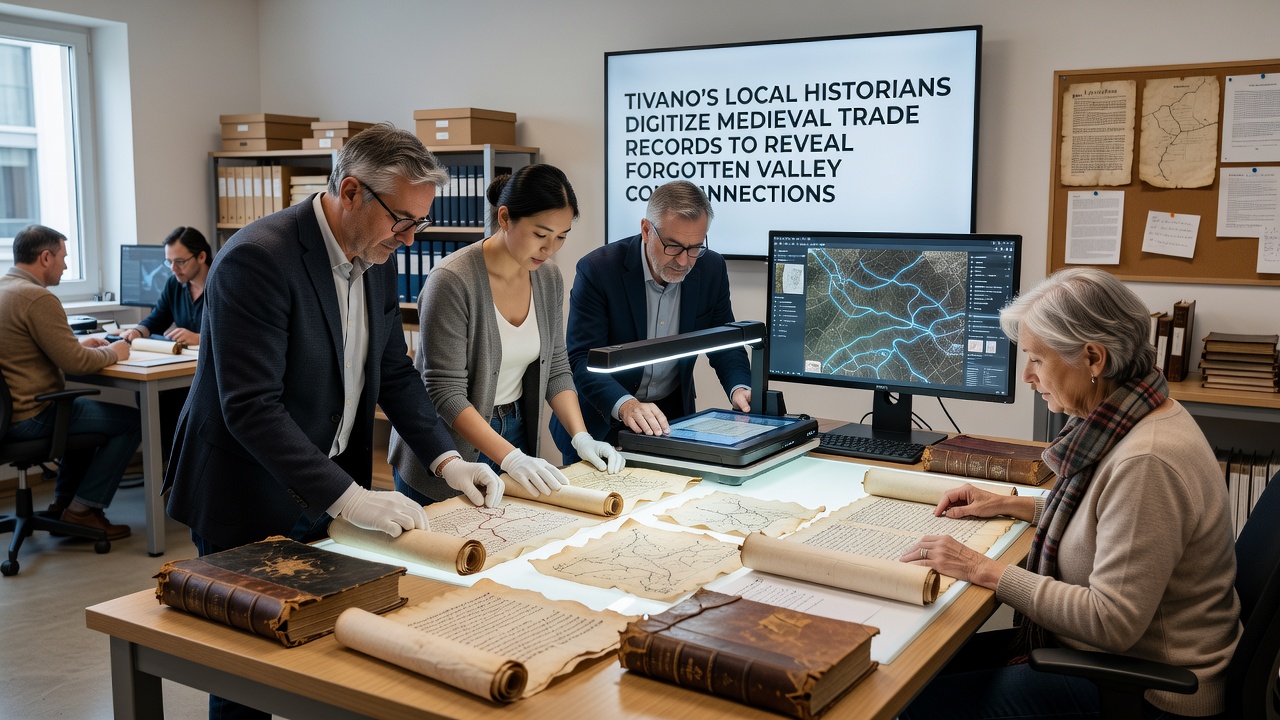
Historians in Tivano have launched a systematic effort to scan and catalog centuries-old trade documents that trace commercial routes through the surrounding valleys. The project draws on municipal archives and private collections where parchment fragments and ledger entries have survived in varying states of preservation. Researchers apply high-resolution imaging techniques combined with metadata tagging to create searchable digital records that link merchants, goods, and seasonal pathways previously studied only in isolation.
Project Scope and Methods
Teams coordinate with regional universities to standardize transcription protocols while preserving original spellings and abbreviations that reflect local dialects from the 12th through 15th centuries. Scanners operate at 600 dpi to capture ink variations and watermark details that help date individual sheets. Data management follows guidelines established by the European Association for Digital Humanities, which emphasize interoperability across different institutional platforms.
One archive room in central Tivano now houses climate-controlled cabinets where bound volumes undergo gradual digitization in weekly batches. Volunteers trained in paleography review each scan for accuracy before uploading entries to a shared repository. Cross-referencing occurs through geographic information system layers that plot market towns and mountain passes mentioned in the texts.
Key Discoveries So Far
Analysis of the digitized ledgers has already identified trade corridors connecting Tivano to neighboring valleys that standard histories had overlooked. Entries list shipments of salt, wool, and iron tools traveling along routes that bypassed larger documented centers. These connections suggest smaller settlements functioned as regular exchange points rather than isolated outposts.
Records from 1347 show payments recorded between families in Tivano and traders from the eastern valley passes, with notations indicating seasonal fairs held at elevations above 1,200 meters. Such details emerge only when multiple documents are viewed together in the digital database. Earlier manual reviews had treated these fragments as unrelated because physical access to dispersed collections proved difficult.
Timeline and Public Access
The initiative began in early 2024 with pilot scans of 200 documents and has since expanded to include more than 3,000 individual items. Project coordinators report that full indexing should conclude by October 2026, at which point a public portal will open for researchers and residents. The release coincides with planned workshops at the Tivano cultural center where participants can query the database for family names or commodity types.
Funding has come through a combination of municipal heritage grants and contributions from local historical societies. Equipment purchases included two flatbed scanners rated for fragile materials and secure server space hosted at a regional data center. Training sessions for new volunteers continue on a monthly basis to maintain transcription quality.
Broader Historical Context
Medieval trade patterns in the Alpine foothills receive attention from institutions such as the Medieval Academy of America, whose online resources provide comparative datasets from other European regions. When Tivano's records integrate with those broader collections, analysts expect clearer pictures of how minor valleys contributed to larger supply chains. A 2023 report from the University of Toronto's Centre for Medieval Studies highlights similar digitization efforts in Canadian archives that recovered overlooked connections between rural producers and urban markets.
Observers note that once the Tivano database becomes searchable, queries about specific merchants or payment methods can return results spanning multiple decades. This capability reduces the time required to trace individual economic relationships that once demanded travel between distant repositories. teh structured data also supports mapping tools that overlay trade volumes onto topographic models of the valleys.
Conclusion
The digitization work in Tivano continues to add layers to the documented history of regional commerce. As more records enter the system, patterns that remained hidden in scattered physical collections become measurable and comparable. By October 2026 the completed database will offer residents and scholars a single point of access for examining how medieval trade linked communities across the valleys. The project demonstrates how targeted scanning and metadata standards can recover connections that earlier research methods left fragmented.